Two Kids, One Device, Zero Compromises: Surviving the Back Seat
Kids Headphones / Travel
The elbow always strikes first. It happens somewhere around mile fourteen, right as the highway stretches into the distance. Two kids, one tablet propped precariously on the center console, and a wired headphone splitter that was supposed to be the ambassador of peace.
Instead, it's a leash. The six-year-old leans left to scratch an itch, and the eight-year-old's earbud gets violently yanked out. Then the volume complaint. "It's too loud!" "I can't hear it!" The splitter, a tangled mess of black cord, sits between them like a monument to failed parenting hacks.
You grip the steering wheel, eyes fixed on the road, listening to the escalating negotiations over who gets to hold the screen and who has to sit at an unnatural forty-five-degree angle just to hear the cartoon dog.
There has to be a way out, preferably before mile fifteen and before you drop more money on an extra tablet (or punish yourself for not charging the extra).
The real problem isn't the cable
 The wire is just a symptom. Every trip ends the same way: one kid annoyed, one kid triumphant, and you somehow implicated in both outcomes.
If they share a screen, someone has a bad viewing angle. If they share an audio splitter, someone is tethered to a posture they hate. If they share a single pair of earbuds, they both get half the experience and all of the resentment. It's a zero-sum game played out in the back seat of a minivan.
Someone is always compromising, which means someone is always complaining. There's a version of this where nobody has to lose anything.
What wireless audio sharing actually feels like
Imagine looking in the rearview mirror and seeing two children sitting on completely opposite ends of the back seat. Pressed against their respective doors, staring at the tablet mounted squarely in the middle. No cord bridging the gap. No physical tether forcing them into a reluctant huddle. Then they both burst out laughing at the exact same moment, together, from opposite corners.
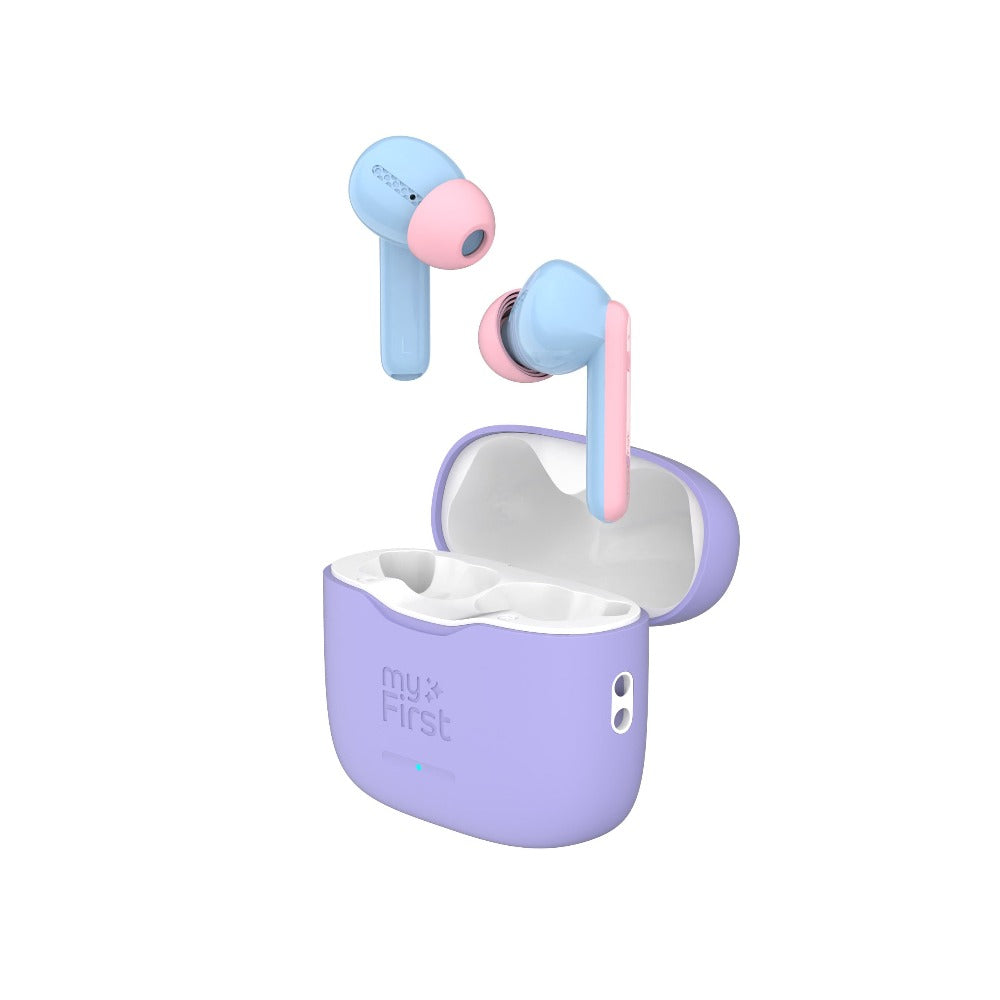
This is what our CareBuds Max actually delivers. By allowing two pairs of kids wireless headphones to connect to a single device simultaneously, the back seat transforms from a wrestling mat into a lounge. They get the shared experience, with the physical freedom of being apart.
There is a particular kind of closeness built from inhabiting the same invisible world at the same time, one that doesn't require proximity. Shared attention, it turns out, is its own form of intimacy.
The same scene. The same punchline. The same sharp intake of breath before something goes wrong for the protagonist. Research agrees. A 2024 study published in Royal Society Open Science found that experiencing intense and similar emotions simultaneously with another person is one of the most reliable mechanisms for reinforcing social bonds.
You see it in the back seat on the long drive. You see it in the hotel room at 7am, when the adults are not yet functional and the kids have already built a fort and resumed yesterday's episode. You see it on the plane, two rows back, when one of them taps the other on the arm because something is about to happen and they don't want their sibling to miss it.
You get something too: one less thing to police. Both headsets are volume-limited for safe listening, a shared safe ceiling that protects their hearing whether they think they need it or not.
A battery that outlasts the journey
 You know the specific dread of the pediatrician's waiting room that is running forty minutes behind schedule. Or the tarmac delay when the seat belt sign is on but the plane isn't moving, and the snacks are already gone. That is the exact moment a low-battery warning feels less like a technical issue and more like a personal attack on your sanity. When you are traveling with kids, you don't need tech specs; you need sheer endurance.
52 hours
enough to survive the outbound flight, the layover, the rental car line, the whole week, and the trip back home
All without a frantic search for a charging cable in the dark abyss of your carry-on (and if needed, the Max headphones also work in wired mode, though not for dual connection).
You charge them once before you leave the house. Then you forget about it, trusting that the audio will keep flowing long after your own energy has tapped out. The ideal headphone for child wireless travel disappears the moment it works.
Two kids, one device, zero compromises
 The back seat is finally quiet. The sun is setting, casting a soft orange glow through the tinted windows, and the only sound in the car is the rhythmic hum of the tires on the asphalt. Two kids, one device, zero compromises. A semi-truck has boxed you in. At least your boiling rage is coming from outside the car this time.
They are asleep now, headphones still resting over their ears, great wireless headphones kids forget they're wearing, the tablet dark on the seat between them. That is the real shift. Not the technology or the gadgets you packed, but the atmosphere of the trip, and the dynamic between two tired travelers who didn't have to fight over a six-inch cord.
Everyone survived, and you might actually enjoy the drive home.
Key Takeaways
- Fit first. If they're uncomfortable, they come off, and then you're negotiating again.
- Volume limits protect. Built-in caps mean one less thing to police at 30,000 feet.
- The battery should outlast the trip. A low-battery warning mid-flight is not a minor inconvenience. It's a crisis.
- Two pairs end the argument. Sharing is a zero-sum arrangement. Someone always loses.
- Wireless means independent. The cord was never just a cord. Removing it quietly reorganizes everything.