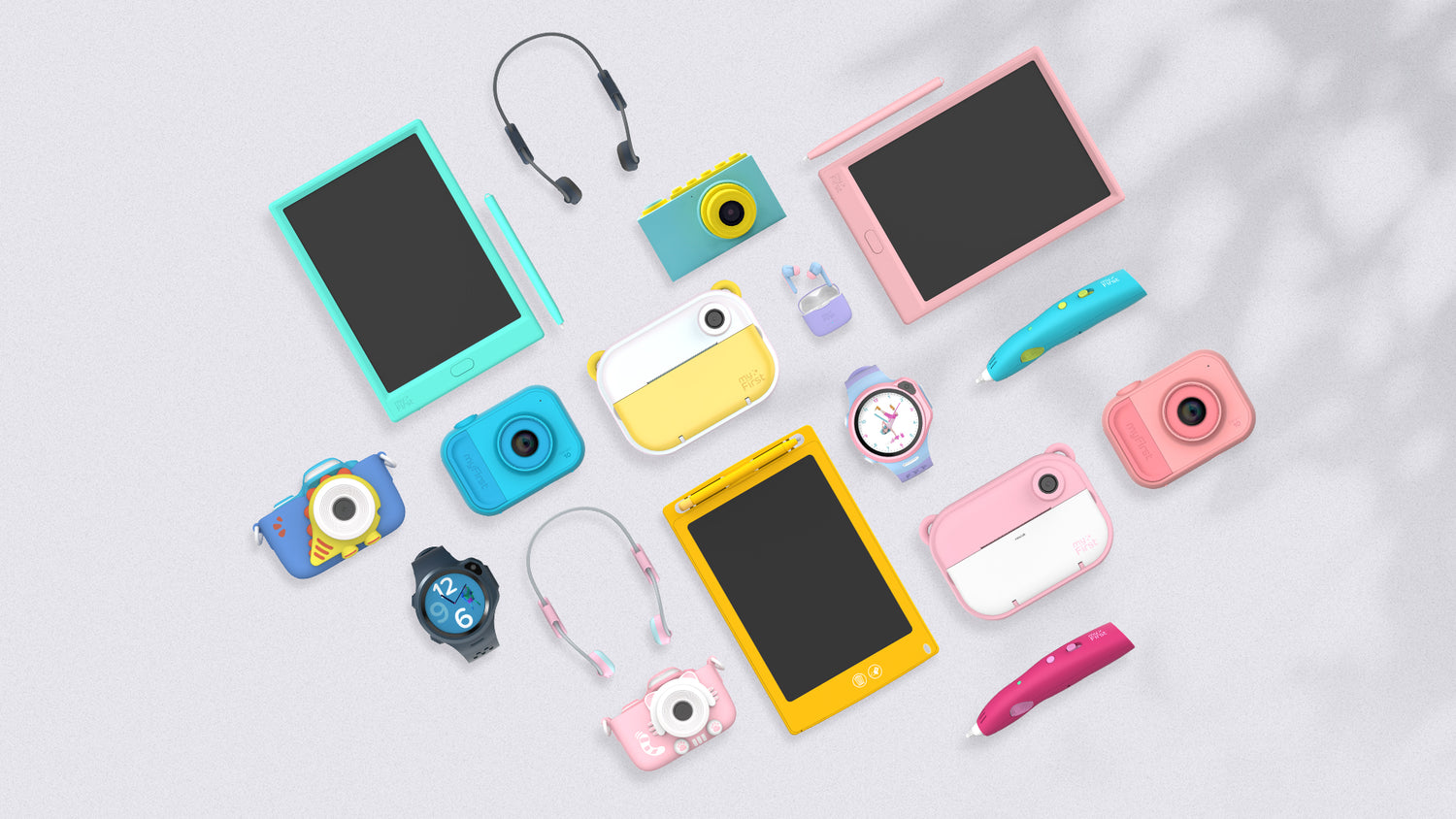
How to Clean an LED Drawing Board
Care Instructions
How to Clean an LED Drawing Board: What Parents Get Wrong
Smudges not coming off? Marker ghosting? Here's how to clean, erase, and maintain it properly.
The number one mistake parents make with an LED drawing board is also the most understandable one. You see a shiny surface. You think "glass." You grab the Windex.
Stop. Put the Windex down.
Most LED drawing boards have acrylic surfaces, and acrylic and ammonia aren't friends. Ammonia-based glass cleaners cause micro-cracking in acrylic. The technical term is "crazing." You will not see it the first time. But after a few months of weekly Windex, the surface develops a cloudy haze that no amount of cleaning will fix. You have essentially given your kid's drawing board permanent fog.
fun fact: the technical term for that cloudy haze is "crazing"Ammonia-based glass cleaner (Windex). Causes permanent micro-cracking ("crazing") and a cloudy haze.
Microfiber cloth, warm water, one drop of dish soap. That is it. For stubborn dried markers, isopropyl alcohol (70%) sprayed on the cloth, not the board, then wipe.
A cloudy surface diffuses the LED light unevenly, and the glow goes patchy. You're maintaining the one feature that makes the whole thing worth buying.
Erasing properlyHow to Erase an LED Drawing Board Properly
Marker ghosting is the second most common parent complaint. You wipe the board, and a faint shadow of last night's dinosaur remains. You wipe harder. The shadow stays. You start to wonder if the board is defective.
It isn't defective. That is just how dry-erase markers work on acrylic.
The fix is simple: erase immediately after use. Dry-erase markers bond more permanently the longer they sit. If your kid draws a robot at 4 PM and you wipe at 8 PM, you are fighting four hours of chemical bonding. If you wipe at 4:15, it comes off like butter.
For ghosting that has already set in, here's the trick: trace over the ghosted lines with a fresh dry-erase marker, then wipe. The solvent in the fresh marker reactivates the old ink, and everything comes off together. It feels like magic.
Paper towels (wood pulp, leaves micro-scratches) or melamine "magic erasers" (literally abrasive foam marketed as miracles).
The sponge eraser that comes with the board. Anything that feels rough on your skin will scratch the acrylic — avoid it.
How to Use an LED Drawing Board (Beyond Just Drawing)
Most parents hand the kid the board and walk away. There's more here than you think.
Tracing practice
Place a drawing or photo under a semi-transparent board and trace. The backlight makes reference lines pop. The glow turns "I can't draw that" into "I can trace that," which is how every artist started.
Shadow drawing
Place objects on the board, turn off the lights, trace the shadows. A toy dinosaur becomes a silhouette. A fork becomes a very modern art piece.
Color mixing
Overlap different colored markers on the glowing surface. Yellow and blue become green, instantly, glowing in front of your kid's eyes. A color theory lecture that costs zero dollars.
Story drawing
Draw a scene, take a photo (the glow photographs beautifully), erase, draw the next scene. String the photos together and you have a stop-motion story your kid wrote and directed.
How Do LED Drawing Boards Work? (Quick Explainer for Curious Kids)
 When your kid asks "why does it glow?" Here's the answer you can give them without looking anything up.
LEDs at the edge of the board shoot light into the acrylic sheet. The light bounces around inside through total internal reflection, the same principle that makes fiber optic cables work. Tiny particles in the acrylic scatter some of that light upward through the surface. The surface glows.
It's the same science that lights up museum display cases and those glowing menu boards at restaurants. Your kid is drawing on restaurant-grade optics.
And now you understand why Windex is the enemy. The acrylic does a precise job of scattering light. Damage the surface, and the scattering gets uneven. Cleaning and physics are the same conversation.
Buying oneWhat to Look for If You Are Buying One

- Acrylic surface. Not glass, which shatters. Not polycarbonate, which scratches easier. Acrylic is the sweet spot: clear, durable, and repairable if you take care of it.
- Adjustable brightness. Kids' eyes are more light-sensitive than adults'. One brightness setting is a board that hurts little eyes at full dark.
- Dual-board option. One large, one small. The small one travels. The large one stays home.
- Auto-fade night light feature. The glow becomes a gentle lamp that eases the transition to sleep, extending usefulness past drawing time.
- Cleaning accessories included. A board that ships with a cleaning cloth, sponge eraser, and spray bottle tells you the manufacturer thought about maintenance. One that ships with none of those tells you they don't expect it to last.
The Maintenance Habit That Doubles the Lifespan
One routine. One habit. Wipe the light up drawing board with a dry microfiber cloth after every use.
Dry-erase ink has solvents that evaporate. The pigment left behind is what causes ghosting. If you wipe while the solvents are still active, meaning within an hour of drawing, ghosting drops to near zero. If you wait until tomorrow, you're cleaning dried pigment off acrylic, which is a harder job and a shorter lifespan for the board.
Store the board flat, not standing. LED edge strips can develop contact issues from vertical stress. Keep the USB port covered, because dust plus USB-C ports equals connection problems.
A board that lasts two years versus one that lasts six months is mostly about whether anyone wipes it down. The same is true of most things in life, honestly.
Care Instructions, Summarized
- Never use ammonia-based glass cleaner on an acrylic LED drawing board. It causes micro-cracking (crazing) that clouds the surface permanently and degrades the glow.
- Erase marker immediately after use. For ghosting, trace over old lines with a fresh marker to reactivate the ink, then wipe.
- Beyond drawing: LED boards work for tracing, shadow drawing, color mixing, and stop-motion story scenes. The glow makes each activity more vivid.
- One habit doubles the lifespan: wipe with dry microfiber after every use, while solvents are still active.