How to Get Kids Excited About Going Back to School
Late July. The back-to-school emails have started. Target has replaced the pool floats with pencil cases. You’re mentally organizing the supply list, feeling something that resembles anticipation. Order is returning. Quiet mornings. A lunchbox that comes back empty instead of not at all.
Your child feels none of this.
You’re counting down to the first day of school. Your kid is counting down the days until summer is over. Neither of you is wrong, but one of you is doing all the emotional work, and that asymmetry is why most back-to-school pep talks land like a weather report: heard, acknowledged, immediately irrelevant.
Sometimes this shows up as garden-variety back-to-school anxiety: a stomachache that appears the week before the bell rings, a sudden reluctance to talk about September, a kid who was fine yesterday and isn’t today. It rarely means something is wrong. It usually just means the transition is close enough to feel.
Why “This Year Is Going to Be Great!” Doesn’t Work
Every parent has delivered some version of this speech. Every kid has nodded through it while calculating how many pool days remain. The pep talk fails for a simple reason: you can’t talk someone into wanting something. You can only create the conditions where wanting it builds on its own.
External encouragement runs into the same problem external rewards do. Promise a kid a sticker for something they already loved doing, and watch the love quietly convert into sticker-chasing. Pull the sticker later, and a lot of kids just stop, having forgotten there was ever a version that didn’t involve a prize. A pep talk pulls the same trick in reverse, handing a kid a feeling to perform instead of one to actually have, and performed enthusiasm has the shelf life of a Capri Sun left in a hot car.
New backpacks probably don’t close the gap either. A kid dreading summer’s end doesn’t look at a three-ring binder and feel hope, they see evidence the countdown is real.
A kid resisting the return to school isn’t being difficult, they’re reporting that a transition is happening to them, not with them. Give them a say in it and the resistance tends to shrink. Tell them to knock it off, and it just gets louder.
This Doesn’t Start Five Days Out. It Starts Early.
Most back-to-school advice waits until August, then crams a whole year’s readiness into one week. Backwards. The kid who walks into September feeling ready is usually the kid who’s been quietly building three things all summer, without ever being told that’s what was happening.
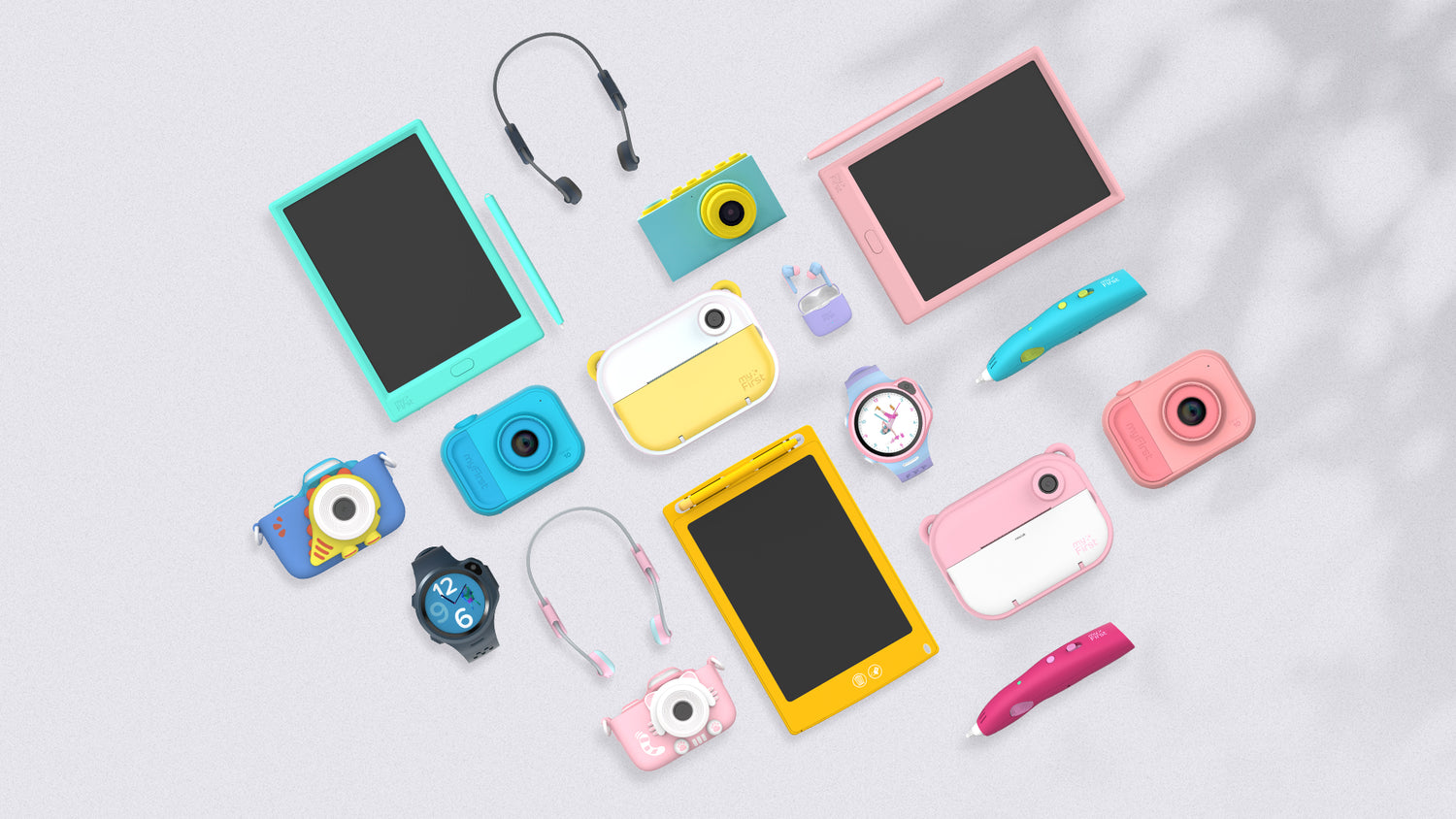
Hand your kid a myFirst Insta Camera early in the summer. When a friend from school comes over, or you run into one at the pool, let your kid print a photo on the spot and hand it over. A photo of two kids mid-cannonball is worth more than one where everybody’s looking at the digital camera. Every exchange is a tiny, physical reminder that school friendships didn’t end when the year did, they just went on break too.
Set out a myFirst Sketch Pad every few weeks, one question: “Draw the kid you want to be this year.” Not a resolution list. Just a picture, however strange, of someone slightly braver or funnier than they were last September. Keep these private, closer to a compass a kid is quietly building for themselves than anything meant for show-and-tell.
This is the one that does the quiet heavy lifting. Let your kid start wearing a myFirst Fone S4 Kids Watch on the low-stakes outings of summer: the walk to the pool, an hour at the park, a bike loop around the block. Not as a leash, but as a rehearsal. A kid gets used to checking in on their own terms, to carrying a small piece of responsibility on their wrist, to the quiet confidence of being reachable without a parent hovering. By the time September asks them to be a little more on their own, the watch already feels like theirs, and so does the independence it stands for.
By the time August arrives, there’s a small stack of photos with friends, a handful of drawings of a kid who doesn’t exist yet, and a watch that’s stopped feeling like a gadget and started feeling like a habit. None of it happened because you announced a countdown. It happened because summer is long, and a little practice spread thin across it barely feels like effort at all.
Close the Chapter Before You Open the Next One
A week before school starts, load the summer’s photos and drawings into a myFirst Digital Frame and let it run on the kitchen counter. Let a whole summer scroll past while breakfast happens, the cannonball photo, the kid-who-doesn’t-exist-yet sketches, in no particular order.
It’s a way of letting a kid see that summer actually happened and was real, before walking toward something new. You can’t skip a goodbye and expect a clean hello. The digital photo frame is the goodbye.
The Last Piece: A Watch That’s Already Ready
 In the final days before school, the watch your kid has been wearing all summer gets its last quiet upgrade on a myFirst Fone S4 Kids Watch.
A private magiCode pattern only your kid and you understand.
The school itself marked as a known SafeZone instead of a scary unknown.
A heart rate check that turns nervousness into data instead of a feeling to fight.
One calm test of the SOS button so it’s never a mystery on the day it might actually matter.
It’s just quietly ready by the time the backpack goes on.
What Your Kid Actually Walks In Carrying
A kid walks in on day one, carrying a summer’s worth of quiet proof: photos with friends, sketches of who they’re becoming, a proper goodbye already said, a kids smartwatch armed and ready underneath it all, and knowing something no pep talk could ever hand them.
Before the Backpack Goes On
- The excitement gap is real and normal. Parents feel anticipation. Kids feel loss. Neither is wrong, but pretending the gap doesn’t exist makes it wider.
- Readiness isn’t built in the last week. It’s built all summer, quietly. A watch for practicing independence, a camera for staying connected, and a sketch pad for imagining who they’re becoming do more across a whole summer than any countdown does in five days.
- You can’t skip the goodbye and expect a clean hello. A digital frame closing out summer’s photos and drawings gives a kid permission to let go before being asked to move forward.
- A smartwatch works best worn early and armed quietly, piece by piece. A summer of low-stakes wear, then a private code, a mapped safe zone, a heart rate check, and a tested emergency button, all ready before they’re needed.
- The goal isn’t to manufacture excitement. It’s to make sure a kid walks in carrying a whole summer of private evidence instead of one manufactured pep talk.