How a Kid's Instant Camera Trains Your Kid to Spot Deepfakes
Kids & AI / Media Literacy
Young kids believe images by default. Show a child a photo and the instinct is to accept it, not question it, which made sense back when a photograph was proof something happened and is a liability now that a convincing one can be typed into existence. That reflex doesn't erode on its own, and scrolling all day doesn't sand it down, it just makes taking images at face value faster and more comfortable.
That's the problem. Here's what you actually do about it: a kids instant camera and about ten minutes a week.
What a deepfake actually looks like
 Most advice hands you a checklist: plastic skin, fingers slightly wrong, rippling background lines. Real giveaways, worth knowing, especially as a cluster: one oddity might be a bad photo, three together lean toward generated.
But a checklist teaches a skill with an expiry date, since every tell is a bug the next model fixes.
AI can't do hands was solid two years ago, barely holds now. Point your kid at something that doesn't decay: not the flaws, the flawlessness.
Real things are a mess, pores, uneven light, bad crops. Generated images tend toward suspiciously clean, and as fakes improve they get more perfect, not more human. Perfect is the thing to distrust. A kid raised on real, imperfect images reads flawlessness as the warning sign, an instinct that sharpens as the technology does.
Set the fakes aside, this matters without them too. Noticing imperfection is close to the whole reason people make art: nobody draws because the world is flawless, but because a crooked tree or a tired face seemed worth keeping.
A camera teaches that habit. It makes fakes feel hollow, since a generated image loved nothing and chose nothing, worth handing a child even if deepfakes vanished tomorrow.
How an instant camera builds a baseline for real
 One way to see it reframes the whole thing. An image generator has exactly one job: answer what would a real photo of this look like? That's also a photographer's job. The kid with a camera and the model spitting out a fake are rivals at the same task, except the kid has to find reality first, the machine only gets to guess at it.
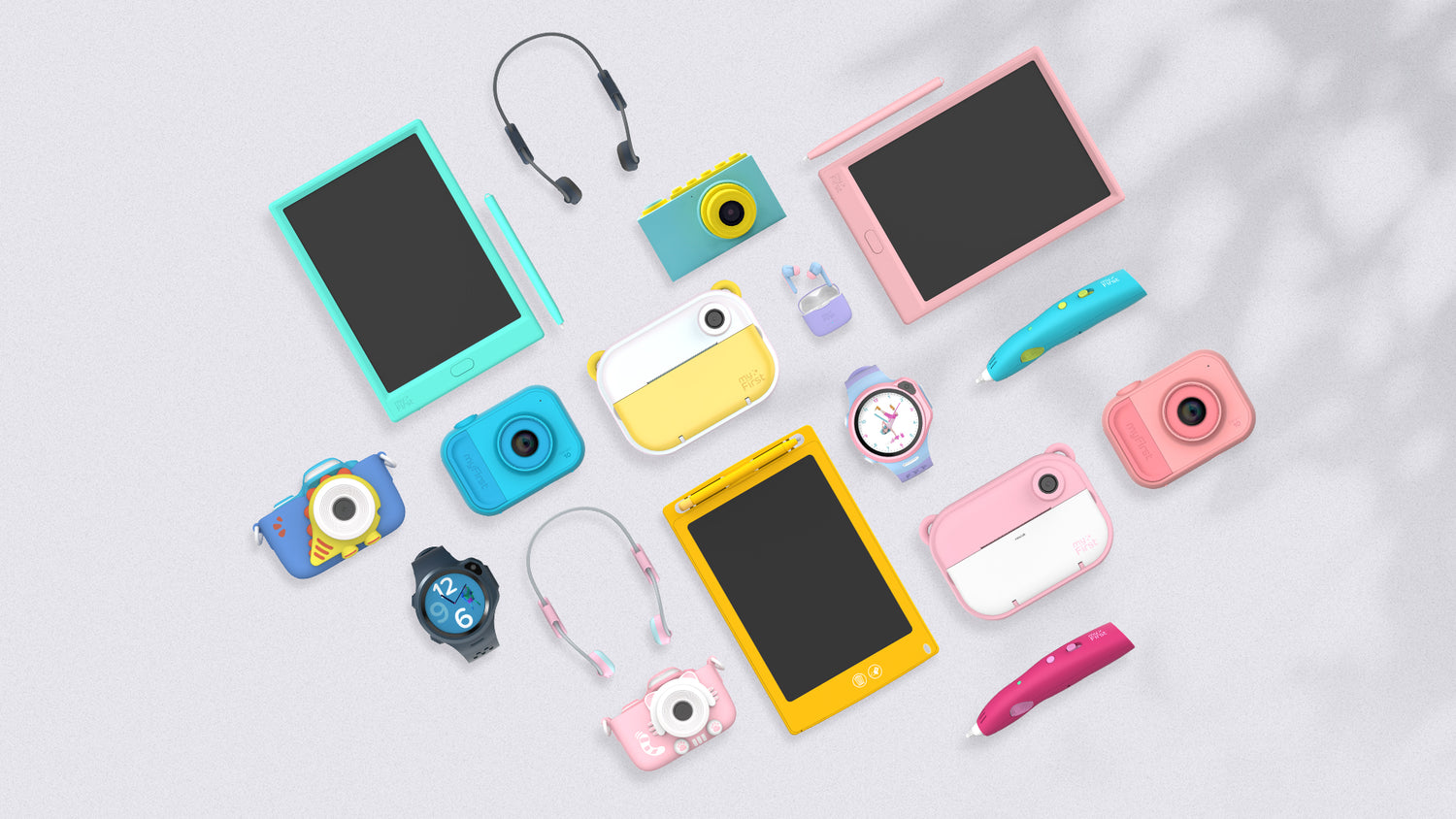
A polaroid camera for kids makes the child stand in front of something real before an image can exist, something a feed never asks of anyone.
The camera does one more thing: it hands a kid a small stack of images whose origin they actually know. A child's image diet is strange now, thousands of pictures a day, almost none with a knowable source, plenty synthetic from the start. The photos a kid takes are the one set whose backstory they hold, because they stood there when the light fell that way.
Owning one folder you can vouch for changes how you read the rest.
Try the three-detail test at home
You don't need a forensics lab. You need an instant camera for kids, an internet connection, and ten minutes.
- Have your child photograph something real: a person, a pet, a tree outside. Let them frame it, shoot it, hold the print.
- Find an AI-generated image of the same subject. Free tools turn a text prompt into a picture; type a dog in a backyard and let it generate one.
- Put the two side by side and ask your child to find three things wrong with the fake. Not which looks better, but what's off here? Check the hands, the skin, whether the perfect parts are a little too perfect.
A quieter lesson hides in this, and it's the one that lasts. Your kid chose what to put in their photo, where to stand, what to leave out. So did whoever prompted the fake. Both images are somebody's decision about how to show a thing, not a neutral window onto it. Once a kid has felt that from the inside, they start reading images as a claim someone is making, not an innocent fact, a habit that outlasts finger-counting.
If your child struggles at first, that's normal, kids default to trust and say both look real. That's the starting line. Run it weekly, Saturday morning is easy, and the questioning starts happening on its own.
It's worth naming plainly: this shouldn't have to be a skill parents teach at all. Ten years ago, media literacy meant reading a headline with a raised eyebrow, not training a kid to doubt a photograph of a dog. That we now need a weekly drill for it says more about what the internet has become than it does about kids. The exercise still works. It's fair to be a little annoyed it's necessary.
By the time your kid is grown, the fakes will be flawless and every tell here will be dead. True, but nothing load-bearing depends on the tells. You're training two instincts that only get stronger as the fakes improve: distrust of the too-perfect, and reading an image as a claim rather than a fact. Those work on a deepfake, a doctored quote, a scam text, anything.
The camera just builds them the most concrete way there is, putting a kid on the other side of the task, making real images instead of only swallowing them.
Key Takeaways
- Young kids believe images by default, and that trusting reflex has to be trained out deliberately. It doesn't fix itself.
- Don't lead with a checklist of tells. They're real today but every one gets patched as the tools improve, so a flaw-hunt has an expiry date.
- Teach the opposite instinct: distrust flawlessness. Real images are messy; a fake tends to be suspiciously perfect, and that signal gets stronger as AI gets better.
- A camera puts a kid on the maker's side of the same task the AI is doing, and hands them a set of images whose origin they actually know, a rare fixed point in a feed full of unknowable ones.
- The weekly three-detail test teaches the durable lesson underneath the exercise: an image is a claim someone made, not a neutral fact.