The 5-Finger Breathing Reset for Back-to-School Anxiety and School Refusal
Back to School / Calm
New classroom, new teacher, new schedule, new bus, new people. Adults call this back to school. For some kids, their nervous system calls it absolutely not.
A little nervousness before school is common, but sometimes that worry grows bigger: stomachaches in the morning, tears at the door, panic before leaving home, or repeated attempts to avoid school. And telling an anxious child there's nothing to worry about rarely makes the worry disappear.
Instead, try giving their brain something concrete to do, one surprisingly simple option uses exactly what your child already has with them: five fingers.
When back-to-school anxiety becomes school refusal
A child who doesn't want to go to school isn't automatically experiencing school refusal. But persistent distress about attending school deserves attention, especially when anxiety repeatedly interferes with getting through the door or staying in class. The important thing isn't to frame it as stubbornness immediately.
Anxiety can show up physically: a racing heart, tight shoulders, a stomachache, fast breathing, crying, feeling frozen. At that point, a long conversation about why school is safe may not be the first thing your child can use. First, you want to help them settle enough to think again. That's where five-finger breathing can fit.
Persistent or severe school avoidance should be discussed with your child's school and an appropriate healthcare professional. Five-finger breathing works for a moment of anxiety, not as a treatment for ongoing school refusal. For that single anxious moment, though, five fingers can become a tiny reset button.
What is 5-finger breathing?
Psychiatrist and neuroscientist Dr. Jud Brewer has taught five-finger breathing as a simple sensory exercise for anxiety. Brown University's School of Public Health describes it as a way for children and adults to use multiple senses to help cut through anxiety and regain focus.
Here's how to do it:
- Hold one hand open like a star.
- Use the index finger of your other hand to trace up your thumb. Breathe in.
- Trace down your thumb. Breathe out.
- Move to the next finger. Trace up. Breathe in.
- Trace down. Breathe out.
- Repeat for each finger until you've traced the whole hand.
That's it, no equipment, no perfect meditation posture, no requirement that a kid suddenly become a Zen master in the morning.
Why touch plus breathing can be easier than just breathe
 Telling someone to take a deep breath sounds easy when you're calm. When you're anxious, not always. Five-finger breathing gives the brain several things to notice at once: your child watches their finger move, feels one finger tracing another, notices the shape of their hand, and coordinates movement with breathing.
And because the movement is tiny, children can eventually use it almost anywhere: on the bus, at their desk, outside the classroom, before a test, or with their hand under the desk when they don't want anyone watching.
Practice before the hard moment
 Don't wait until your child is standing at the school entrance in tears to introduce the technique. Practice when they're already calm, try it once before bed, again in the car, again on a relaxed Sunday afternoon.
You can even record a simple guided version: up, breathe in, down, breathe out. Some children find voice guidance easier while they're learning.
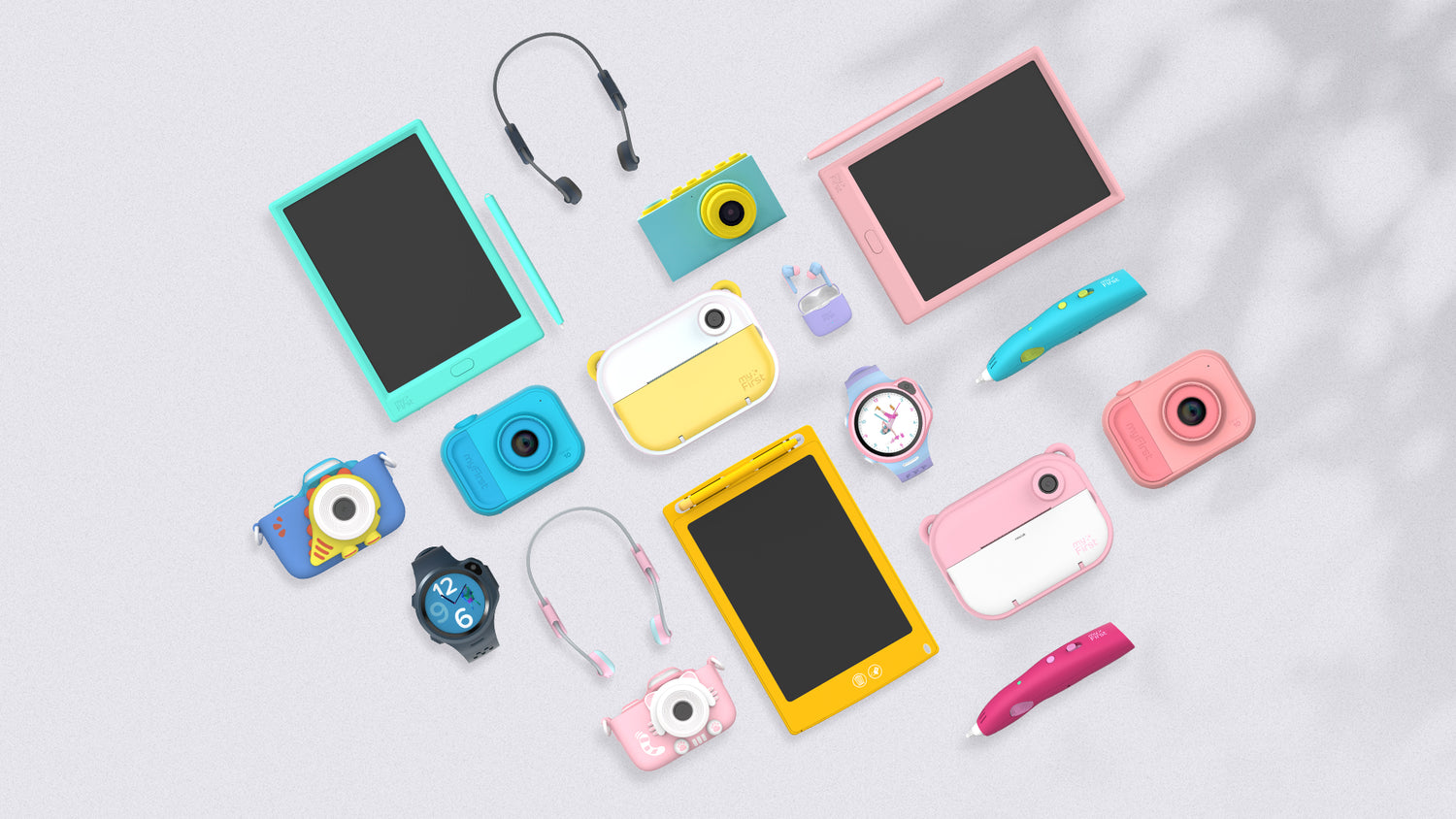
If you use audio, myFirst BC Wireless Lite, one of the best kids wireless headphones for this kind of layered listening, offers an interesting advantage: they keep the ears open rather than sealing the child off from surrounding sounds.
Bone conduction. Audio is transmitted through the cheekbone while environmental sound remains fully audible.
That matters when the goal isn't to disappear into audio but to layer a calm instruction over the real world. Your child can hear the breathing cue while still hearing you, a teacher, or what's happening nearby.
No cord. A wireless kids headphones design with no cord to get tangled around, easier for a young child to put on unassisted.
Volume limit. The myFirst audio range emphasizes kid-conscious listening levels, with many of its children's headphones designed around an 85 dB limit.
The breathing technique itself is what calms the anxiety, the headphones just make guided practice easier.
Key Takeaways
- Back-to-school anxiety can sometimes escalate into significant school avoidance or school refusal.
- Five-finger breathing combines slow breathing with touch and visual attention.
- Teach the technique while your child is calm so it's easier to recall during stressful moments.
- Open-ear bone-conduction audio can provide guidance while preserving awareness of the environment.
- Persistent school refusal or severe anxiety deserves support beyond a breathing exercise.