The Real Culprit Behind "Brain Rot": Topic-Hopping
Kids & Screens / Attention
Brain rot won Oxford's 2024 Word of the Year. Usage climbed 230 percent in a single year. Kids say it themselves, often with a laugh. Here's the twist one new study found: the brain isn't damaged. Something narrower and stranger is going on, and it's not the thing most parents blame.
Why Deep Thinking Is a Skill Kids Need to Practice
Deep thinking isn't a trait a child is born with. It's a skill the brain builds by holding one idea long enough to turn it over, using a mental workspace psychologists call working memory, one of the strongest known predictors of reasoning, comprehension, and long-term academic success. A developing brain practices deep thinking every time it follows a story, solves a puzzle, or sits with a hard question instead of swiping past it.
Think of attention less like a tank that empties and more like a muscle that strengthens with use: every long, undistracted stretch is a rep, and every autoplay session is a skipped one. A child who rarely finishes a thought is usually just out of practice, and practice is something a parent can hand them.
Swiping vs. the Algorithm: What Actually Hurts Memory
 A 2026 CHI conference study (Siy et al., 180 children in grades 4 through 6) gets specific in a way most screen time coverage doesn't. Rather than treat short-form video as one thing, the researchers tested its two working parts separately.
The swipe interface
Drove more video switching, simply more clips watched per minute.
The recommendation algorithm
Drove more category switching, more jumps between unrelated topics.
Neither mechanic alone moved memory scores. It was the combination, fast swiping paired with a constantly changing subject, that did. That combination has a name you already know: recommendation-plus-swipe is, functionally, the same setup as YouTube Shorts, TikTok, and Reels by default. In the study's data, it produced roughly three times the topic-switching of a curated playlist on autoplay.
What the Study Found About Kids and Brain Damage
Let's get the boring-but-important part out of the way first: across all six groups in the study, memory scores basically didn't budge. Short-term memory stayed flat. No damage, no dramatic decline, nothing that would justify a scary headline.
The one thing that did move was small, and it only showed up for kids doing two things at once, swiping fast and getting served a different topic every time. Their working memory dipped a little afterward. The kind of effect a researcher would call real but modest, which is a very science way of saying yeah, it's there, don't panic.
That tracks with what Oxford's own dictionary team said when they added brain rot to the OED: there's no evidence phones are actually rotting anyone's brain. So can we retire the panic? Almost. Here's the twist: one group of kids actually did a little better on the memory test after watching. Researchers call this the alerting effect, the idea that something fast and stimulating can jolt attention awake before it wears it down. Nobody knows yet how long that boost lasts, or whether it's worth the tradeoff.
Lillard and colleagues found that just nine minutes of a fast-paced, fantastical cartoon was enough to throw off preschoolers' executive function.
Another study found that teens who switch between media a lot tend to have weaker working memory and lower grades.
Different studies, different decades even, same basic story: it's not the screen. It's the switching.
The Fix: Give Kids One Subject to Finish
 So if it's not screen time and it's not the swipe, what actually helps? Slow the pace, and cut down on how often the subject changes. That's backed by the study's own data: single-topic content beat algorithmic variety every time. It reads more like parenting advice than an engineering fix, but there it is, sitting in the paper's own discussion section, and it happens to describe exactly what a creation project does. A few examples of what that looks like in practice:
A photo essay built around one walk, not a feed of unrelated pictures.
A drawn comic that follows one story to an ending.
A stop-motion clip that takes an afternoon to finish, start to finish.
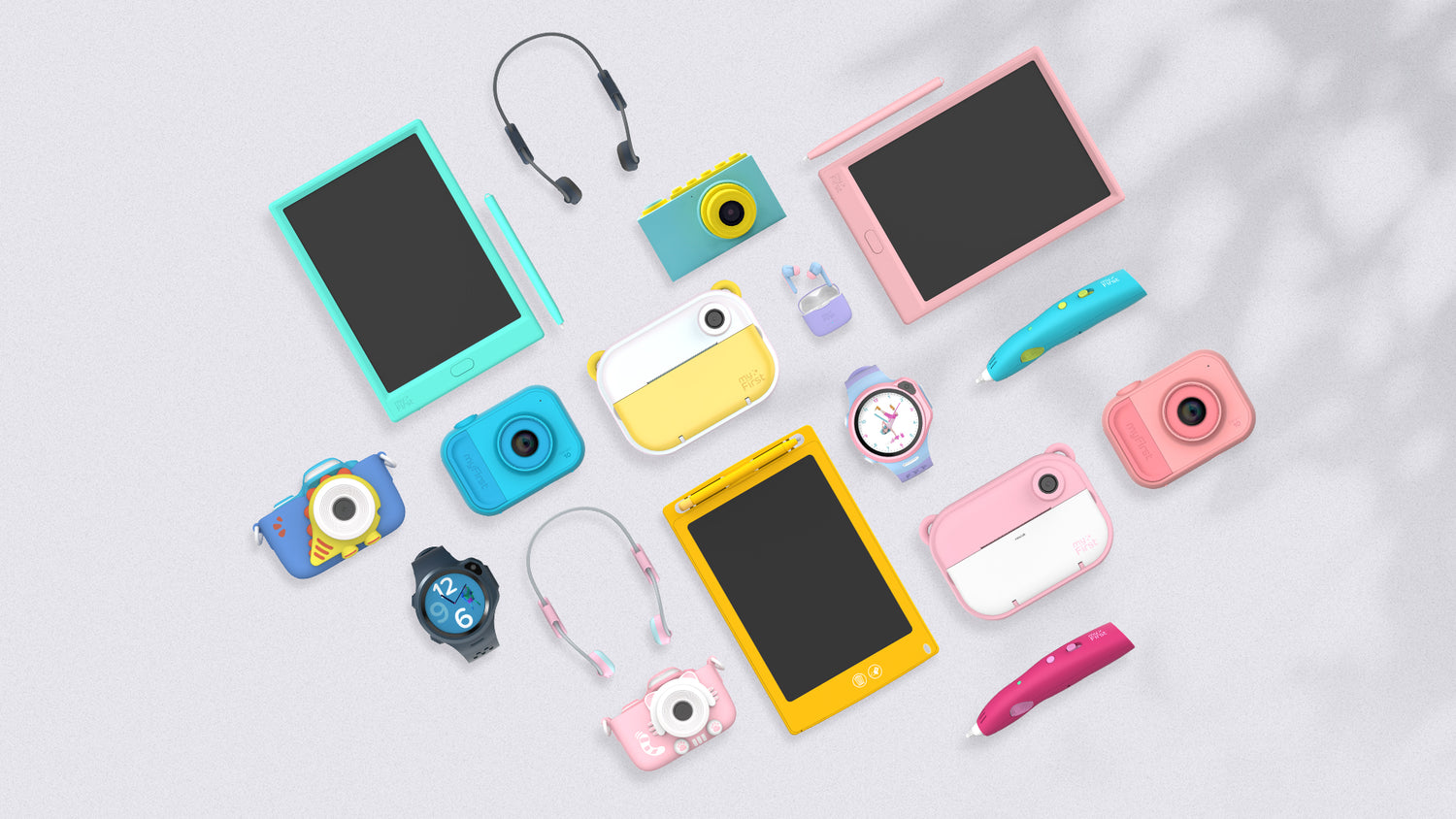
Each is the opposite of category-hopping: one subject, followed all the way through, with no algorithm reshuffling the topic every eight seconds. A kids camera like the myFirst Insta Lux turns a walk into one story a child shot and chose, beginning to end. A drawing board like the myFirst Sketch Pro does the same for a child who thinks better with a pencil in hand, making that single-thread process visible frame by frame.
The gadget isn't the point. Finishing one thing, instead of switching subjects forty times in ten minutes, is.

Related reading: the longer view on why the screen-time effect is about more than minutes on a device.
Key Takeaways
- Deep thinking is a skill, and working memory is the workspace it runs in.
- Swiping and the recommendation algorithm are two separate mechanisms, and their combination, the default setup of most short-form apps, hurt memory.
- The measured effect was real but small and single-study; there was no evidence of brain damage, and one group's scores briefly improved.
- Similar switching-and-attention effects have shown up in separate, earlier research on fast-paced TV and adolescent media multitasking.
- Less topic-switching is what the data points to as the fix, and it's exactly what hands-on creation with tools like myFirst Insta 20 and myFirst Sketch Pro naturally builds in.