What Gen Z's Self-Diagnosis Habit Should Tell Parents of Younger Kids
Kids & Social Media / Mental Health
A 2025 LifeStance Health survey of 1,110 U.S. adults found that 29% have self-diagnosed a mental health condition based on social media content. Gen Z leads every metric. Half of Gen Z respondents self-diagnose. Fifty-five percent have sought mental health advice on social media. Forty-five percent describe themselves as constantly connected, nearly double the Gen X rate of 25%.
Gen X grew up without a feed. Millennials got social media in college. Gen Z got it in middle school. The next cohort is getting devices in elementary school. The pattern doesn't flatten when the starting age drops. It accelerates.
The survey's own framing backs this up: among those who self-diagnosed, fewer than half discussed their symptoms with a clinician, and about a quarter rarely or never did. Twenty-seven percent said self-diagnosing caused them unnecessary stress or anxiety.
Why kids are self-diagnosing younger than Gen Z did
Gen Z, the cohort most affected by social media self-diagnosis in the LifeStance data, typically got social access between ages 12 and 14. Today's under-13s are entering the ecosystem earlier, with less developed media literacy and identity.
The LifeStance data shows the pattern compounds with connectivity. Twenty-six percent of adults check social media within five minutes of waking. Twenty-one percent report negative mental health effects from being constantly connected. If adults with fully formed prefrontal cortices struggle to regulate the pull, the expectation that a 10-year-old will self-regulate is a bet against the architecture of the device.
The Wait Until 8th movement, with more than 155,000 families pledged to delay smartphones until at least eighth grade, reflects a growing parental recognition that the issue isn't readiness. The issue is exposure during the years when identity, emotional regulation, and social skills are still under construction.
What happens when social media replaces a real mental health diagnosis
When a teenager watches a 60-second video about ADHD and decides they have it, two things happen. First, the clinical picture gets distorted. Social media creators emphasize relatable symptoms and omit diagnostic criteria, creating a highlight reel that almost anyone can see themselves in. Second, the professional evaluation gets skipped. The LifeStance survey found that 81% of adults agree social media mental health content can't replace professional care. They know. They do it anyway.
Kids know screens are designed to be addictive. They scroll anyway. The survey proves that information doesn't change behavior when the environment makes the behavior effortless.
For younger kids, the question is whether parents will wait until the pattern starts and try to intervene, or design the environment so the pattern doesn't take root during the most vulnerable years.
Calling, drawing, writing: real activities that replace a feed
 The strongest argument for delaying smartphone and social media access is the window it creates. Between ages 6 and 12, kids are building emotional vocabulary, social skills, and a sense of self through direct experience. When that window is filled with algorithmic content, the input shapes the architecture. When it is filled with real-world interaction, the architecture builds itself.
What follows are activities, the actual things a kid does that build a sense of self, with the objects that support them named second.
Small, ordinary acts of real connection:
- Calling a grandparent on a Sunday afternoon
- Leaving a voice message for a parent instead of a text nobody reads until later
- Checking in after school without opening a single app
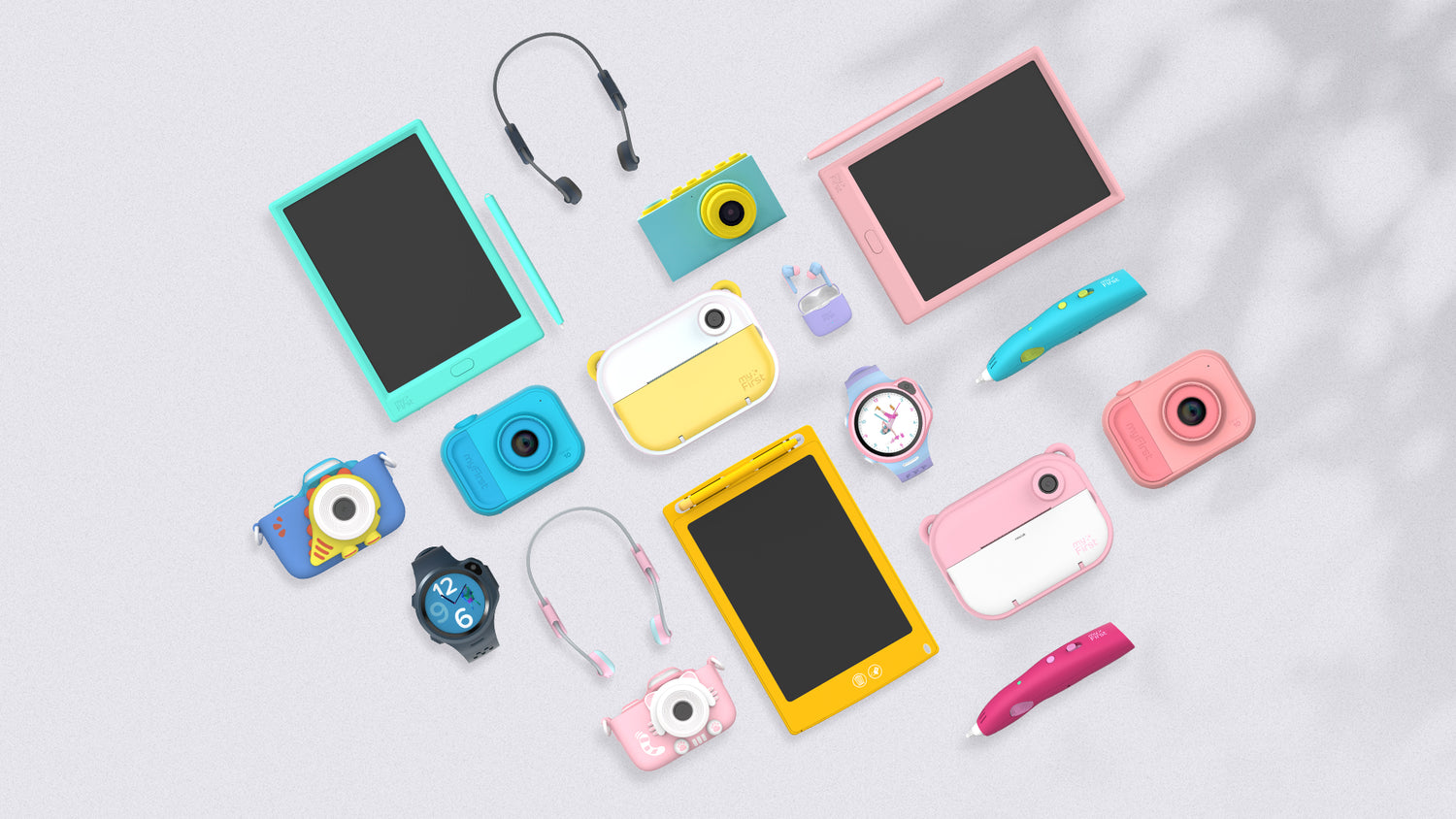
These are exactly what a kids smartwatch like the myFirst Fone S4 is built to carry, without a browser, app store, or social media:
- Cellular calling
- GPS location
- SOS functionality
The child can reach their parents. Parents can reach the child. No feed, no algorithm, no content designed to maximize engagement. The myFirst Circle ecosystem keeps the connection closed to approved family contacts, removing the social validation loop entirely.
 Sitting down after a hard day and drawing what it felt like. Writing a few messy, unedited sentences in a notebook nobody else will read. These are some of the oldest, lowest-stakes ways a kid can process an internal state instead of reaching for someone else's ready-made label, closer to what a therapist means by sitting with a feeling than anything a 60-second video offers.
A myFirst Sketch Pad gives that activity a screen-free surface, with nobody grading the result and no follower count attached. A plain paper journal does the same job with even less friction: no charging, no app, nothing to buy beyond a notebook.
The years before smartphone access aren't years of deprivation. They are years of different activities. What a kid does with their own hands and their own voice during those years determines what kind of foundation gets built before the algorithm arrives.
How parents can delay social media self-diagnosis in kids
 The objects above are only half of it. The other half is what a parent actually does, independent of anything sitting on a shelf or a wrist. Three shifts change the trajectory:
- Delay the smartphone, not the connection. A children's smartwatch gives kids the calling and safety features parents want without the social media architecture that drives the self-diagnosis pattern. The Fone S4 runs on cellular with no contract, so the commitment is monthly, not multi-year.
- Model skepticism about online health content out loud. When a video makes a sweeping mental health claim, say so, in front of your kid: that's one person's experience, not a diagnosis. Kids absorb how adults evaluate information as much as the information itself.
- Talk about mental health at home before the algorithm does. The LifeStance survey found that 54% of adults see mental health misinformation on social media weekly. Kids will encounter it. The question is whether they have a framework for evaluating it before they absorb it. That framework comes from parents, not from a feed.
The goal is that when your child eventually does encounter mental health content online, they have enough lived experience and family conversation to evaluate it critically. That foundation is built in the years before the smartphone, through what's in their hands and what's said at home, not one or the other.
Key Takeaways
- Nearly one in three American adults self-diagnoses mental health conditions using social media content, and Gen Z leads at 50%.
- The generational gradient is steep: Gen Z is twice as likely as Gen X to be constantly connected, and the under-13 cohort is getting devices even earlier.
- Fewer than half of self-diagnosers discuss their symptoms with a clinician afterward, and about a quarter rarely or never do, meaning social media content replaces professional care for a meaningful share of people.
- 81% of adults know social media content can't replace therapy, yet the behavior persists, proving awareness alone doesn't change the pattern.
- Delaying smartphone and social media access during identity-formation years, and building it around real activities like calling family and drawing or journaling instead of a feed, gives kids a foundation the algorithm can't reach.