New York Bans AI Chatbots, Rations Tutors
AI Policy / Education
On September 2, New York City announced the broadest student AI policy in the country. I found the part that matters three lines below the headline, in the same release.
The city banned companion chatbots for every student in every grade. Then it licensed three tools for up to 50,000 high schoolers. Quill, for close reading, capped at 15 minutes a week. Edia, for math coaching, capped at 20 minutes. And Brisk Teaching, for activities a teacher designs.
Fifteen minutes a week is a dose, and a dose is a different argument from a ban.
That is the useful thing in the whole story. Everyone else is arguing about whether AI belongs in schools. The policy asked a better question: how much, designed by whom, for what. Los Angeles reached the same place from the other side, blocking generative AI on district devices while a committee writes next year's rules.
What the two largest districts actually decided
New York. A one-year moratorium, effective in the 2026 to 2027 school year, covering children from 2-K through eighth grade, around 600,000 students. A coalition of students, educators and parents will study the impact and report back. High schoolers get two short AI literacy modules a year, and a small number of classrooms get supervised pilots.
Los Angeles. Blocked generative AI on district-issued devices for every student, roughly 378,000 of them. It can't reach the phone in a pocket, and says so.
Both are pausing to work out what they face. The evidence is thin, so pausing is defensible. Worth saying before attacking it.
The one category banned everywhere
 Here is the detail that shows what the policy protects. Generative AI for younger children is paused for a year, and allowed for older ones in small, supervised amounts. Companion chatbots are prohibited across all grades, including the high schoolers otherwise allowed to touch the stuff.
The chancellor's line was that innovation doesn't mean more technology. What got banned outright was the machine that pretends to be a person. A tutor that walks a child through a math problem is a tool. A companion that listens, remembers and appears to care is a different object wearing similar clothes.
That line holds up in my own house too. Most parents draw it in the same place.
Why teachers can use AI and students can't
 Children work this one out by October. Teachers are still allowed to use AI for lesson planning and other operational work. Students aren't allowed to use it at all.
The policy has already conceded the main point: the software itself isn't the danger. The dose, the designer and the purpose are. A teacher using AI to prepare a lesson can still tell when the output is wrong. A student using it to produce an answer skips the practice that builds that judgement.
What the chatbot was actually doing
A companion chatbot has three qualities no human can match. It answers every time. It never disagrees. It never asks your child to wait.
A child who asks a real friend something at nine at night usually gets nothing until morning. A child who asks a chatbot gets an answer in under a second, with total confidence, from something that appears to care.
Two recent surveys back up that comparison. The Center for Democracy and Technology found 42 percent of students already use AI as a friend or companion, and 38 percent say it is easier to talk to than a parent. A 2026 RAND study in JAMA Pediatrics found 19.2 percent of adolescents use AI chatbots for mental health advice, and 63 percent tell no one they did.
That isn't a flaw in one product. It's what happens when something is available and agreeable at every hour, no matter how good the model behind it is. Weighing that risk was never something a policy document could do for a family. Only a parent at bedtime can.
What the ban didn't install
 Taking the machine away leaves a void, and voids get filled.
School policy governs the hours between the bells. The chancellor has conceded that home is much harder to police. The homework hour, the nine o'clock question, the dinner argument nobody wants twice: those were the moments a chatbot was winning, and no district has jurisdiction over them.
So the policy is a ceiling. It removed the thing that always answered and never pushed back, and installed nothing where it stood.
Keeping the human channel open
 What belongs in that space isn't another machine that answers. It's a person who might be busy.
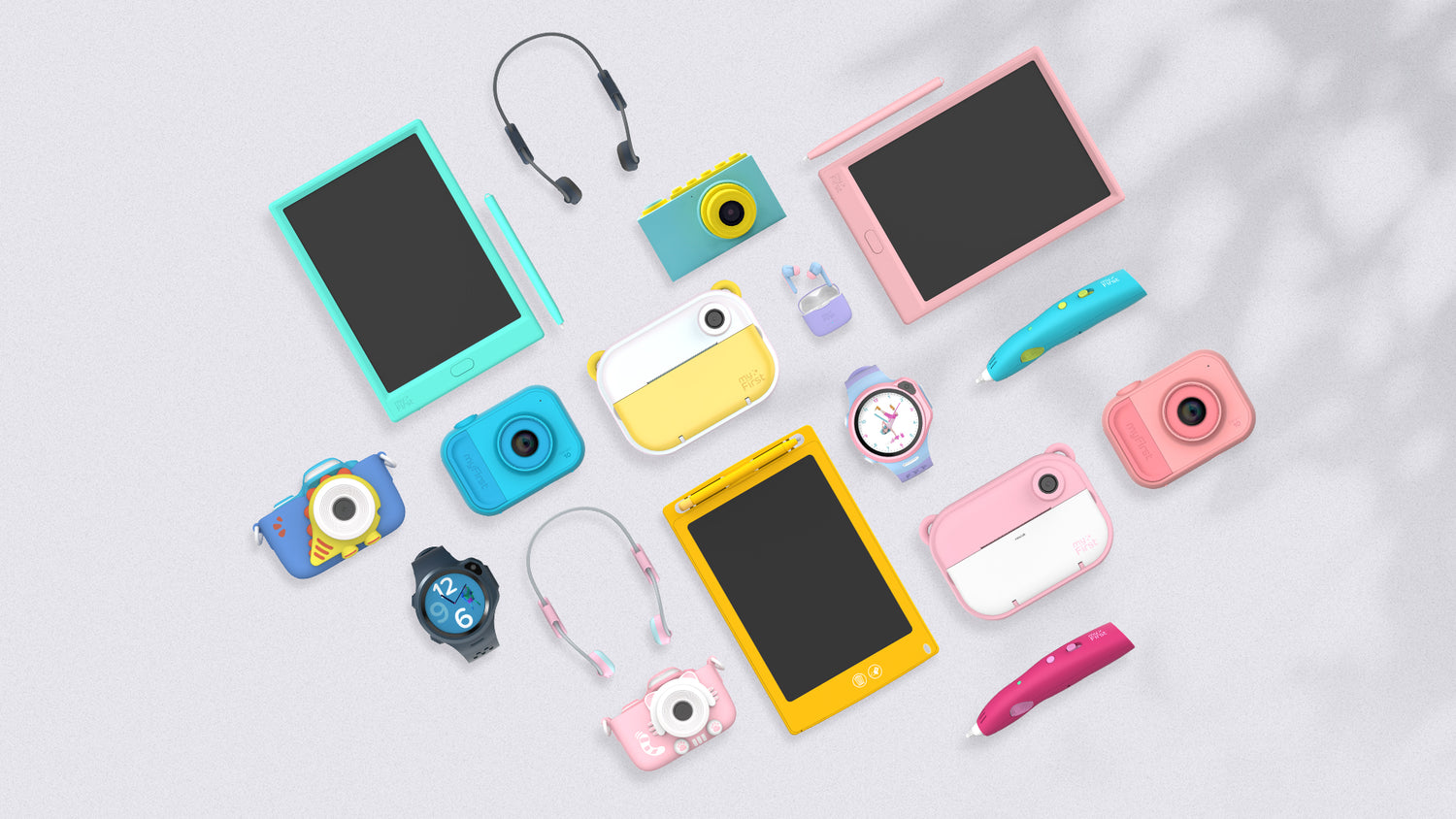
The myFirst Fone S4 is a smartwatch for kids aged five to twelve handling calls, video calls, texts and group chats through a parent-approved contact list. No social media, no open browser, no third-party apps, no chatbot waiting to be asked. During school hours, Class Mode switches everything off except the one-touch SOS button, so a teacher gets a focused classroom and a parent stays reachable.
It doesn't replace a companion, and nothing should. What it does is keep a real person one press away, including the ones who might not pick up, which is the part children need to practise. I'd rather my own kid learn that early: sometimes nobody answers right away, and that's not a design flaw, it's what every relationship outside childhood is like. For the concepts themselves, our plain-language guide to AI for kids is where we start.
The nine o'clock question was never really about AI. It was about who answers.
 FAQ
FAQ
Is conversational AI safe for school students?
It depends on what the conversation is for. A vetted tool that coaches a student through a math problem, supervised by a teacher, for a capped number of minutes a week, is what New York approved. A chatbot offering companionship or emotional support is the category the city banned for every grade.
Why can schools use AI but students can't?
Because the two uses are different activities. A teacher using AI to prepare a lesson still has to judge whether the output is right. A student using it to produce an answer skips the practice that builds that judgement. The restriction is about who is doing the thinking.
Key Takeaways
- New York's policy is a one-year moratorium with a study attached, not a permanent ban.
- The one category prohibited at every grade is the companion chatbot. Machines that simulate a relationship were treated differently from machines that explain things.
- Teachers may still use AI to prepare lessons while students may not use it at all. The policy already concedes that the software isn't the problem.
- A chatbot that answers instantly, never disagrees and never makes a child wait isn't just convenient, that combination is its own risk: a child never has to sit with not knowing or hear no from something they trust. Taking the chatbot away doesn't remove the risk, it just leaves a void that gets filled by whatever is closest.
- What belongs in that void isn't another machine that never says no. It's a person who might be busy, reached through a device with boundaries.