Visual Literacy Is the New Reading. Here's How to Teach It at Home.
Kids & AI / Visual Literacy
When seeing stopped being simple
A 2026 study asked 37 children between ages six and ten to tell the difference between human-made and AI-generated content. Text, photos, faces. The children performed at or below random chance. An adult comparison group did better, but not by much.
Moreover, children who spent more time on screens were worse at spotting AI content. More exposure didn't build better discernment. It built complacency.
Meanwhile, UNICEF confirmed in February 2026 that at least 1.2 million children across eleven countries had their images manipulated into sexually explicit deepfakes in the past year alone. Deepfake abuse is abuse, the statement read. There's nothing hypothetical about this problem anymore.
Reading used to mean decoding text. In 2026, reading also means decoding images. And most kids haven't been taught how.
What visual literacy means
John Debes coined the term in 1969 when he co-founded the International Visual Literacy Association.
Modern education frameworks treat visual literacy as a core literacy alongside reading, writing, and numeracy. The American Library Association defines it as the ability to interpret, evaluate, and create visual information.
Translation for parents: visual literacy is the skill of looking at an image and understanding what it is, where it came from, whether you can trust it, and what it is trying to make you feel. A child who can read a sentence but can't read a photograph is functionally illiterate in half the information they encounter daily.
The difference between reading text and reading images is pace. Text forces you to slow down. You decode word by word. Images arrive whole. Your brain processes a picture in milliseconds, and that speed bypasses the critical thinking that text demands. Visual literacy is the discipline of slowing down what the eye does automatically.
Why the old assumption about digital natives backfires
 The common parental reflex is to assume kids are digital natives who intuitively understand technology. The research points the opposite direction. Children in the ScienceDirect study overattributed AI-generated content as human-made. They defaulted to trust. Their instinct was to believe what they saw.
It's not hard to extrapolate that people with higher visual literacy can spot manipulated images more reliably. People who relied on gut feeling, who avoided deeper analysis, are more likely to be fooled.
It's also worth noting that knowing deepfakes exist didn't translate to feeling confident about spotting them. Knowledge alone wasn't enough. The skill had to be trained.
How drawing builds the visual reading muscle
 Here's where it gets counterintuitive. The tool that builds visual literacy is a drawing surface, not a software app or a media literacy quiz.
When a child draws, they're forced to observe. They have to look at a shape, break it into components, and reproduce it with their hand. That process trains exactly the kind of patient, analytical seeing that deepfake detection requires. You can't fast-forward through a drawing the way you scroll past a feed.
Research on drawing and visual processing has consistently shown that the act of drawing something improves memory for that object beyond what looking alone achieves. The hand and the eye work together. The brain encodes more deeply. Psychologists call this the drawing effect, and it has been replicated across age groups from young children to older adults. The mechanism is straightforward: drawing forces you to decide what matters. You can't reproduce a leaf without deciding its shape, its vein pattern, its edge. Those decisions are visual literacy in action.
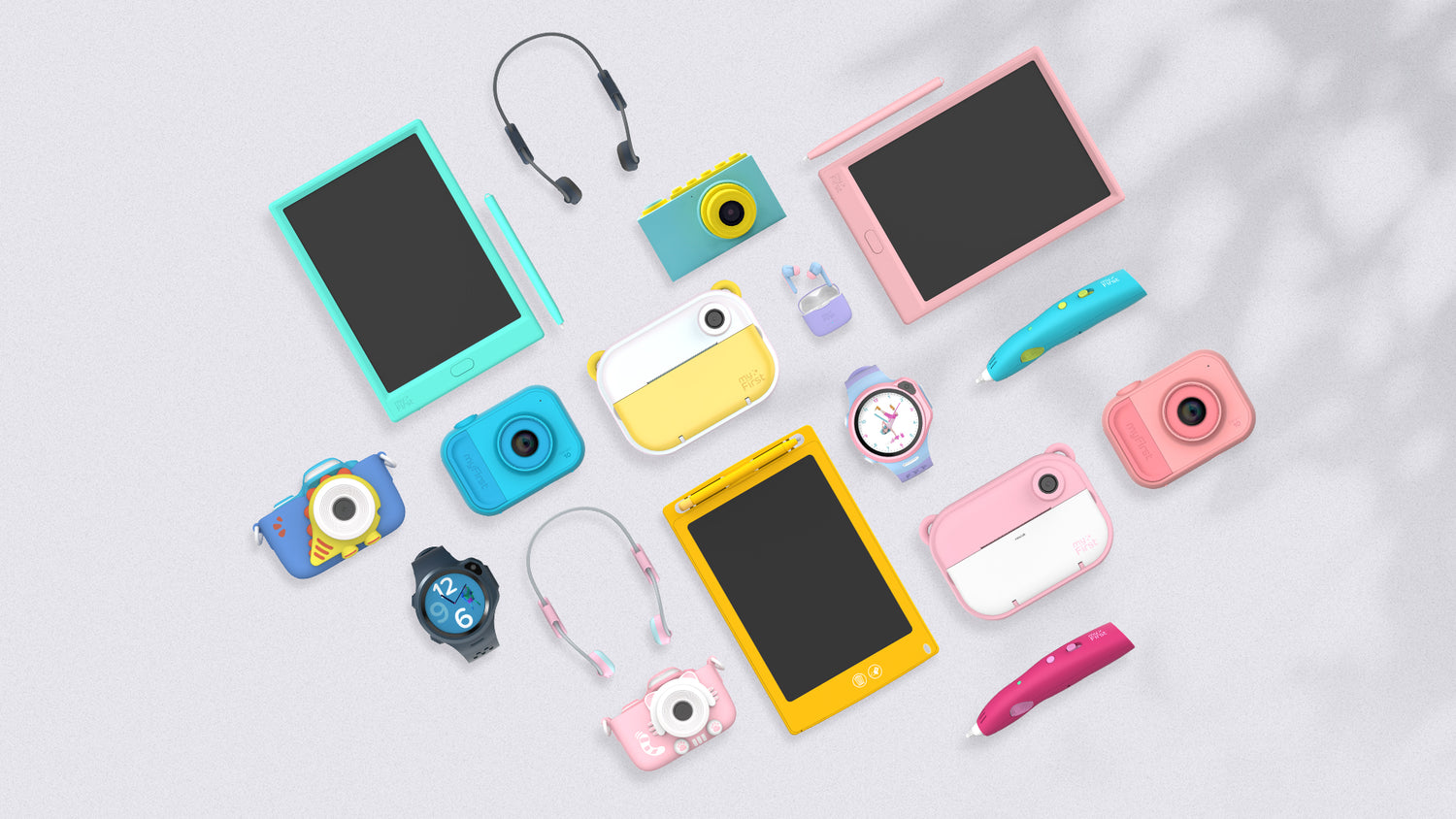
A drawing board, where the child makes the marks themselves, builds visual learning in a way that watching an AI generate an image doesn't. The child is the author. The child decides where the lines go. The child has to look, really look, at what they're trying to represent.
What this looks like at the kitchen table
 Set out a drawing tablet and ask your child to draw something they saw today on their sketch pad. A bird, a building, a face. The act of trying to reproduce it forces close observation.
Did the bird's beak curve up or down? Were the windows on the building square or rectangular? These are visual literacy questions, even if nobody calls them that.
When your child shows you the drawing, ask what they noticed. Not is it good, but what did you see that surprised you? That question trains the habit of reflective looking, the disposition acting against deepfake deception.
The bigger frame
Visual literacy will not solve every problem the AI image economy creates. Structural solutions, watermarking, regulation, platform accountability, all matter. But at the individual level, the message is clear: the people who spot manipulation are the ones who learned to look carefully.
Drawing is the oldest training method for careful looking we have. It predates screens, cameras, and AI by about forty thousand years. The irony is that in 2026, the most relevant defense against synthetic images is the same one cave painters used.
Key Takeaways
- Kids default to trusting what they see, and AI images are exploiting that. Recent research found children ages 6 to 10 do no better than random guessing at telling AI-generated content from the real thing.
- This isn't a hypothetical problem. UNICEF has confirmed large-scale, real-world harm from manipulated images of children, this is already happening, not a future risk.
- Visual literacy, not screen time, is what actually helps. Kids who spend more time on screens aren't better at spotting fakes, they're worse. The skill has to be built deliberately.
- Drawing trains the habit of looking closely, the same patient, detail-noticing observation that's linked to spotting manipulation, though the direct link between drawing and deepfake detection specifically hasn't been tested yet.
- The fix is a routine, not software. A kid who draws regularly is practicing the underlying skill. No app required.